“A singe spark can start a forest fire”, Mao Zedong, 1930.
Mao was right. It was on the 6th of December when 16-year-old Alexis was falling dead from the bullet of a police officer in the very heart of Athens.
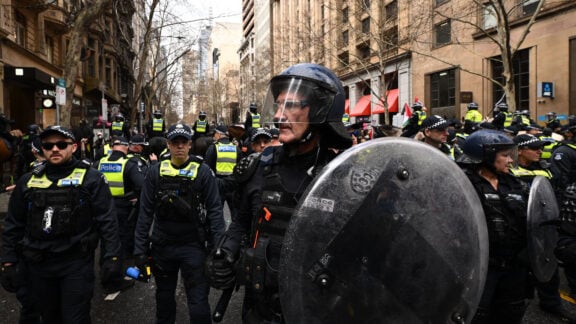
What followed the homicide is known – Greece stepped into violent street clashes between indignant youths and police forces.
Like the 2005 civil unrest in France and the 1992 Los Angeles riots, the incidents of December 2008 had underlying causes, beyond the fuse which created the social explosion.
Alexis’ murder was the spark which led a large number of desperate – disappointed from politics – youths in an outburst of temper.
It proved in practice how easily political corruption can lead to social unrest, especially in times of economic recession, high unemployment rates and deep inequalities within society.
A spark can burn the whole forest.
An opinion poll conducted for Ethnos daily a year ago showed that 89.8 percent of Greece’s youth do not trust political parties, while 62.4 percent of them do not have faith in the state’s justice.
The truth is that political leadership’s cynicism is deeply responsible for the above results; when Ministers and government officials commit infractions on the laws without consequences, society feels betrayed. As a result of this, the notions of law and order tend to lose their actual legitimacy within society.
The clientelism, as a decades-long standing illness of Greek political life has led to a malfunction of democracy.
That consists of Greece’s modern tragedy.
Thirty-five years since the restoration of Democracy in the country, the Greek state is a welfare state only in words and titles.
In fact, behind the facade of modernisation, there is still a degenerated, untrustworthy state mechanism which adds to the sorry state of society, which is already bedeviled from financial recession.
According to Kathimerini columnist Paschos Mandravelis the explosive situation of the previous year’s December “had to do with so many little things that had gradually built up to create the general feeling that the law is enforced selectively. It had to do with a nebulous, yet very real, rage aimed at a state that many, especially the young, feel expends its severity on the weak while being benevolent to the powerful.”
Indeed, the annual International Transparency report for 2009 featured Greece as Europe’s “Champion” in state sector corruption, being 71th out of 180 countries – equal with neighbouring Bulgaria, Romania and the Former Yugoslav Republic of Macedonia.
The exposure of the so-called Vatopedi land deal scandal and the alleged Siemens bribery case led to the enhancement of injustice feeling, as long as the high officials who were involved in them didn’t face actual legal penalties.
The Greek riots had then created concern in Europe’s capitals.
As French journalist Jean-Marie Colombani has noted, the youths of May 1968 were actually luckier than today’s young people who face unemployment in their 20s.
“Today, the admittance of young people in the labour market happens in an older age while the perspectives of professional evolution are few,” Colombani was writing in his weekly article in the Sunday edition of To Vima.
The National Statistical Service of Greece confirms that the unemployment rate for 2008 was at 7.8 percent, while in the first half of 2009 it was raised to 9.3 percent.
Moreover, according to the 2009 Employment in Europe report (published on November 23, 2009) “men, young people, the low-skilled and workers on temporary contracts have borne the brunt of the employment contraction. Employment in the EU has shrunk by over 4 million jobs since the start of the crisis, although the effect has been somewhat mitigated thanks to the use of shorter working hours and other schemes”.
But the issue of unemployment is just one reason which contributes to modern social crisis.
Greece’s student community, which consisted of December’s major portion of protesters, had been in turmoil since 2006, as a result of a series of laws proposed by the conservative government, regarding the reform of the country’s education system – an education system which has been accused as being problematic and ineffective due to the failure of last decade’s reforms.
The newly-elected government of PASOK has promised to propose a new plan for both secondary and tertiary education system but it won’t be an easy job.
A very large number of parents are desperate regarding the cost of the secondary education, while unemployment creates anxiety for young people regarding their future employment opportunities.
The gradual economic degradation of the Greek economy over the last 10 years has mainly affected the youth.
In the current economic situation, it is very difficult for a young Greek, even at the highest educational level, to find a first job with a salary of more than 700 euros per month (US$900-$1000).
That leads to the assumption that success at school or university cannot guarantee a decent job, especially in times of high living costs.
The 2008 violent riots in Greece is a phenomenon of modern European societies – from Ireland to Bulgaria and from Spain to Germany there is a substantial feeling that some political and economic elites are above the law.
Back in December 2008, French President Nicolas Sarkozy had postponed his ambitious educational reforms as a result of the Athens incidents.
The governments in Spain and Italy have also faced dynamic demonstrations in the last five years, while London hosted a quite large number of protestors during G20 Summit earlier this year.
The message seems to be clear: The so-called “700 euros generation” feels that the present socio-economic system in Europe is injustice and inhuman.
The financial recession of the last couple of years made the things even worse and governments, both neoliberal, social-democratic or conservative ones, carry huge accountability.
“Injustice anywhere is a threat to justice everywhere,” Dr.Martin Luther King wrote once and he was absolutely right.
When political corruption meets social injustice, especially in times of economic recession, the result is dangerously unpredictable. What is needed is only a fuse.
Nicolas L. Mottas is a research University student (PhD) and writer. He studied in London and Paris and holds a Master of Arts on Diplomatic Studies from the Diplomatic Academy of London. He is an International news editor for the Greek newspaper Makedonia and contributes to various news sources as a political Op-Ed writer.